PORTCOAST: DIGITAL TECHNOLOGY OPENS NEW BREAKTHROUGH OPPORTUNITIES FOR THE CONSTRUCTION INDUSTRY
In the implementation of Resolution No. 57-NQ/TW, Mr. Tran Phuc Minh Quang, M.Sc. – Deputy General Director of Portcoast, highlighted the significant opportunities ahead for Vietnam’s construction industry, particularly with the development of high-speed railways and urban railway systems. According to Mr. Quang, these projects can serve as “living laboratories” for the integrated application of BIM, GIS, and Digital Twin technologies throughout the entire lifecycle — from design and construction to operation. His perspective also emphasizes that digital transformation goes beyond adopting new software. It requires redesigning workflows, standardizing processes, and connecting data, thereby creating practical value and enhancing efficiency and management capabilities across the construction industry.
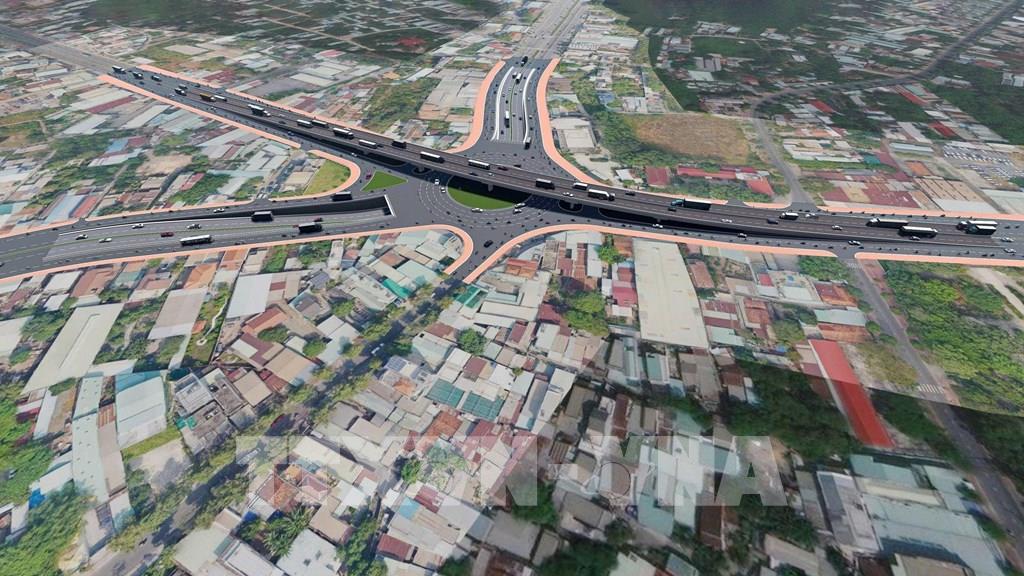
Advanced technologies such as Building Information Modeling (BIM), Geographic Information Systems (GIS), and Digital Twins are being widely applied. Illustrative photo: Huyen Trang - VNA
After more than one year of implementing Resolution No. 57-NQ/TW of the Politburo on the development of science, technology, innovation, and national digital transformation, the Ministry of Construction has initially established a highly interconnected shared data ecosystem. Advanced technologies such as Building Information Modeling (BIM), Geographic Information Systems (GIS), and Digital Twins are being widely applied, fundamentally transforming the methods of state management while opening up breakthrough opportunities for one of the country's key economic sectors.
As digital transformation becomes a core driver of the economy, the construction sector is facing significant pressure to comprehensively change its management methods in order to keep pace with the rapid development of infrastructure projects, urban areas, and the real estate market.
Previously, important information relating to planning, geological surveys, design documentation, construction, and facility operation schedules was often stored in a fragmented and scattered manner across multiple agencies and different systems, resulting in wasted data resources and prolonged inter-agency coordination.
To comprehensively address this issue, Resolution No. 57-NQ/TW identifies science, technology, innovation, and digital transformation as strategic levers for improving national governance capacity. In the construction sector, which covers regional planning, public investment capital, transport infrastructure, urban development, housing, and the real estate market, data is no longer merely a passive storage tool but has been elevated into a strategic resource that determines the quality of management and administration.
At a recent working session with the Ministry of Construction, Standing Deputy Prime Minister Pham Gia Tuc emphasized that the results of implementing Resolution No. 57-NQ/TW should not be measured merely by the number of formally completed tasks, but must be demonstrated through specific products, practical digital platforms that are already operational, and tangible benefits delivered directly to citizens and businesses.
Statistics from the Ministry of Construction show that, to date, out of a total of 287 tasks assigned under Resolution No. 57-NQ/TW, the Ministry has completed 171 tasks, equivalent to approximately 60%. Notably, the Ministry of Construction has completed all 10 out of 10 sector-specific databases and successfully connected all 5 out of 5 core databases with relevant ministries and agencies, including the Ministry of Public Security, to facilitate data sharing and reuse in the processing of public administrative procedures and gradually integrate them into the National Data Center system.
If the digital data system is considered the foundation, then the effectiveness of administrative procedure reform is the most objective "measure" of success. Technological changes only have real value when businesses and citizens can experience greater convenience, including shorter waiting times, reduced costs, and improved transparency.

The construction sector is facing major breakthrough opportunities as the Prime Minister has approved strategic technology development tasks for high-speed railways and urban railways. Illustrative photo.
Currently, the Ministry of Construction provides online public services for 246 administrative procedures under its authority, reaching a rate of nearly 99%. Thanks to interconnected data systems, the required application documents for all 58 related administrative procedures have been significantly reduced. Information that has already been updated by state agencies in the shared system will no longer need to be re-declared by citizens or accompanied by complicated certified documents. If the digital data system is considered the foundation, then the effectiveness of administrative procedure reform is the most objective "measure" of success. Technological changes only have real value when businesses and citizens can experience greater convenience, including shorter waiting times, reduced costs, and improved transparency.
Through a comprehensive review of 454 administrative procedures, the Ministry of Construction proactively proposed eliminating 56 procedures, simplifying 91 procedures, and decentralizing 10 major procedures to local authorities for more proactive handling.
These bold measures are expected to help the business community save up to VND 2.9 trillion in compliance costs, equivalent to a reduction of 23%, while the total processing time for administrative dossiers has been reduced by more than 18% compared with previous procedures. This fundamental change marks a shift in mindset from "digitizing existing processes" to "redesigning new processes".
Instead of simply transferring existing manual processing steps to an online environment, the Ministry has streamlined procedures and eliminated unnecessary intermediate stages, allowing workflows to operate more smoothly while shifting from pre-inspection toward post-inspection.
Mr. Tran Phuc Minh Quang, M.Sc. - Deputy General Director of Portcoast, commented that the construction sector still has tremendous opportunities for breakthroughs as the Prime Minister has approved strategic technology development tasks for high-speed railways and urban railways.
These projects are expected to serve as "living laboratories" for applying the entire BIM, GIS, and Digital Twin data ecosystem from the design and construction stages through to operation. The key task for the next phase is not simply to develop additional software, but to focus intensively on "cleaning" legacy data, completing the legal framework for data governance and sharing, standardizing technical standards nationwide, and strengthening the responsibility of each affiliated unit for updating information.
Digital transformation in the construction sector has officially moved beyond the stage of building basic technical infrastructure and is advancing toward in-depth data exploitation to create practical value. Success is no longer measured by the number of software systems deployed, but by the actual reduction in time and social costs, moving toward transparent, modern, and development-oriented public administration.
Source: bnews.vn
Pageviews: 0
PORTCOAST CONTRIBUTES INFRASTRUCTURE SOLUTIONS FOR HO CHI MINH CITY’S NATIONAL INDUSTRIAL–ENERGY HUB
By petrovietnam.petrotimes.vn - 01/08/2026
At a seminar on developing Ho Chi Minh City into a National Industrial...
Portcoast Makes History with Third Consecutive SAG Award
By thanhnien.vn - 28/07/2026
Portcoast Consultant Corporation - a certified Vietnamese science and ...
Port Relocation – A Strategic Step for Ho Chi Minh City
By sggp.org.vn - 26/07/2026
Relocating ports away from the city center will not only help ease tra...