The Biên Hòa–Vũng Tàu Expressway, Coastal Road 994, Long Sơn–Cái Mép Road, Phước An Bridge, and Road 991B are gradually forming an integrated transport network connecting seaports, industrial zones, and expressways. Mr. Pham Anh Tuan, General Director of Portcoast, stated: “Once the transport connectivity projects are brought into operation as an integrated network, Cái Mép–Thị Vải will no longer be merely a seaward-facing port cluster; it will be fully connected to the vast economic hinterland.” This integrated infrastructure will help shorten freight travel times, reduce logistics costs, enhance port operational capacity, and create momentum for a new sea-oriented growth pole in Ho Chi Minh City.

Transport infrastructure is reshaping connectivity across the eastern part of Ho Chi Minh City. Expressways, coastal roads, bridges and port access routes are being developed in a more integrated manner, helping shorten travel times, ease pressure on older road corridors and create new development space for seaports, logistics, industry, urban areas and tourism.
Opening a Strategic Transport Corridor to the Sea
A major highlight is the Bien Hoa-Vung Tau Expressway, which was put into operation at the end of April 2026. The new expressway reduces dependence on National Highway 51 while significantly improving access to the Cai Mep-Thi Vai port complex and industrial zones across the region.
For transport and logistics businesses, the new network is expected to make cargo movements more predictable, reduce travel time and support lower logistics costs between industrial parks, seaports and major consumer markets.

The Coastal Corridor Shaping a New Development Space
Running in parallel with the expressway is Coastal Road 994, a strategic corridor extending along the coastline from Long Son to Ho Tram. The route is nearly 80 km long, with total investment of more than VND 6.5 trillion, and construction began in June 2023. According to the source article, overall construction progress had reached approximately 80%.

The importance of Route 994 goes beyond its transport function. Once completed, the road is expected to connect a chain of industrial, port, energy and tourism areas, while forming a new coastal development corridor and improving access to urban and tourism destinations along the shoreline.


Critical Links Completing the Logistics Chain
Alongside the coastal road, several projects providing direct connections to industrial zones and the Cai Mep-Thi Vai port complex are being accelerated. The Long Son-Cai Mep road is nearly 4 km long, with total investment of almost VND 1.2 trillion, and is expected to open to traffic in September 2026, creating a more direct connection between the Long Son industrial and petrochemical area and the deep-water port system.
Phuoc An Bridge is another critical link. The bridge is nearly 4.4 km long and has an investment of around VND 4.9 trillion. Crossing the Thi Vai River, it connects eastern Ho Chi Minh City with Dong Nai. Once completed, cargo flows from the Mekong Delta will be able to reach the Cai Mep-Thi Vai port complex more conveniently via the Ben Luc-Long Thanh Expressway, with the transport distance expected to be shortened by about 30 km.
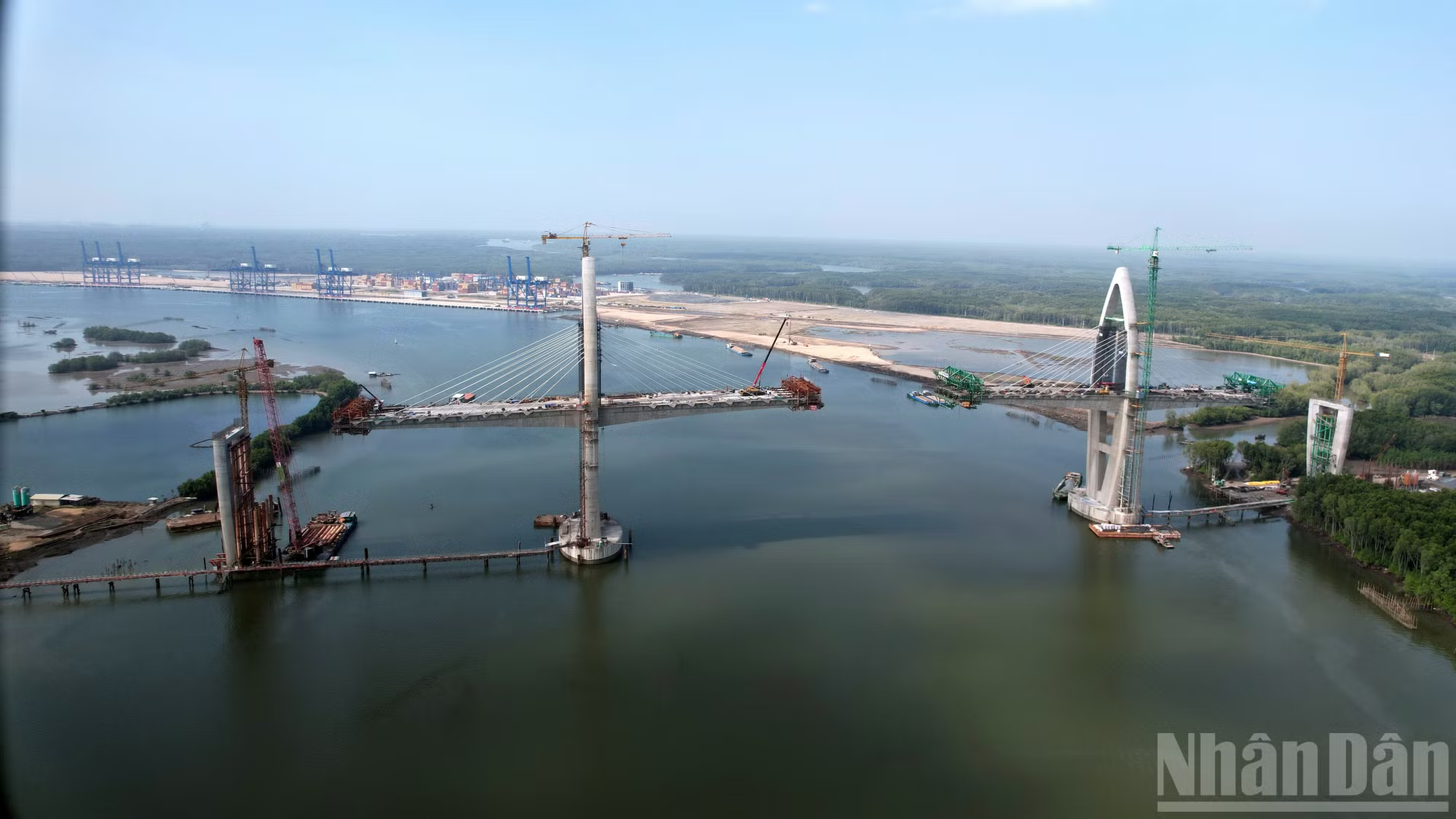


Connectivity Projects Accelerating
- Long Son-Cai Mep Road: nearly 4 km, with total investment of almost VND 1.2 trillion.
- Phuoc An Bridge: nearly 4.4 km, with total investment of around VND 4.9 trillion.
- Road 991B: nearly 10 km, with investment of more than VND 3 trillion; connecting the downstream Cai Mep port area with National Highway 51.
- Road connecting to the Bien Hoa-Vung Tau Expressway: nearly 16.5 km, with total investment of almost VND 13.9 trillion; expected to be completed by late 2026 or early 2027.


Infrastructure Creating New Opportunities for Seaports and Logistics
Seaport and logistics companies are among the direct beneficiaries of the new transport network. The Cai Mep-Thi Vai port complex has deep-water advantages and the capacity to accommodate large container vessels, but its operating efficiency has long depended heavily on the quality of inland transport connections.
As the main transport corridors become fully connected, container travel times from northern industrial areas to the port could be reduced substantially. The source article also notes expectations that the share of direct cargo pickup and delivery at the port could increase from around 15% to 20%-30% in the next few years, and potentially rise further to around 30%-40% in a later stage.
A New Driver for an Emerging Growth Pole
The integrated transport system is not only serving freight movement. As cargo flows are directed more efficiently toward Cai Mep-Thi Vai, pressure from heavy vehicles passing through central urban areas can be reduced, creating more space for cities to develop in a more modern and sustainable way.
Improved connectivity also provides the foundation for major development plans associated with Cai Mep Ha port, a free trade zone, industry, energy, petrochemicals, tourism and logistics services. The transport project pipeline is therefore regarded as an important factor in forming a sea-oriented growth pole with international competitiveness.
The Logistics Ecosystem Is Expected to Expand
- Empty-container services, redistribution and container storage can expand along with port throughput.
- Demand for warehousing, ICDs and distribution centers is expected to grow along the new transport corridors.
- Container repair, maintenance and refurbishment services will have additional room for expansion.
- A large-scale logistics service chain is expected to form around the Cai Mep-Thi Vai port complex, strengthening the area's appeal to logistics investors.
From New Roads to the Vision of a Mega-City
Expressways, bridges, coastal roads and port access routes are forming a new transport network in eastern Ho Chi Minh City. As these links are completed, travel between industrial zones, seaports, logistics centers and coastal tourism cities will become more convenient, while supporting the restructuring of the region's economic space.
On that foundation, the eastern area is expected to develop into a major sea-oriented growth pole, contributing to Ho Chi Minh City's ambition to become a large-scale economic, logistics and international trade hub in the region.
Reference source: Nhan Dan Newspaper – E-Magazine “Expectations for Transport Connectivity Projects in Eastern Ho Chi Minh City” . The content above has been edited and summarized to fit the article structure of the Portcoast website.
Source: Nhan Dan Newspaper
Pageviews: 0