Portcoast Shaping the Vision for Cai Mep Ha FTZ: Paving the Way for Ho Chi Minh City’s Acceleration and Regional Ascent
The amendment of Resolution 98/2023 is considered a decisive step for Ho Chi Minh City to establish a Free Trade Zone — a model that has driven the success of global economic hubs such as Singapore and Shanghai. If approved, the Cai Mep Ha Free Trade Zone will unlock the investment environment, shorten administrative procedures, attract global “eagles,” and position the Southeast Region as a leading logistics and maritime hub in Southeast Asia. This is the key for Vietnam to integrate more deeply into global value chains and generate new economic momentum for the city, the region, and the nation. Mr. PHAM ANH TUAN General Director, Portcoast Consultant Corporation
Ho Chi Minh City is currently endowed with exceptional “favorable timing and advantageous geography” to establish a Free Trade Zone (FTZ), especially as the city’s new economic space expands after administrative consolidation and strengthened regional connectivity.
Demands from reality
This can be clearly seen through several outstanding advantages: Ho Chi Minh City’s seaport system is the largest in the country; its position as a “mega city” with a vast market; a complete industrial ecosystem; and the synergy of a broader ecosystem consisting of Long Thanh International Airport – an international financial center (IFC) – and the Cai Mep international transshipment deep-sea port. The combination of capital flow (IFC) and goods flow (ports + FTZ) creates a sustainable development model that attracts global investment and international trade, similar to Singapore or Shanghai (China).
However, establishing an FTZ still faces difficulties and barriers. For example, in terms of legal mechanisms, although Resolution No. 98/2023/QH15 of the National Assembly provides several pilot mechanisms for Ho Chi Minh City, existing regulations on land, investment, and construction remain overlapping. The lack of a sufficiently “strong” and “breakthrough” legal framework makes administrative procedures cumbersome and not truly “free” in the international sense.
In addition, current transport infrastructure remains inconsistent. Road and rail networks connecting to Cai Mep – Thi Vai need to be completed quickly to maximize the logistics advantages of the FTZ.
In the draft Resolution amending and supplementing certain provisions of Resolution No. 98/2023/QH15, Ho Chi Minh City has proposed many special and superior mechanisms compared to current regulations. Notably, granting authority to the city’s People’s Committee to establish, expand, and adjust FTZ boundaries; allowing land allocation and land leasing without auctions or bidding for investment projects within the FTZ (except commercial housing projects).
The city also proposes mechanisms allowing foreign investors to establish economic organizations without needing prior investment projects or investment registration certificates, provided they comply with market access conditions. Regarding taxation, proposed corporate income tax incentives include a 10% tax rate for 20 years, 4 years of exemption, and 50% reduction for 9 years; along with 50% personal income tax reduction for 10 years for specialists, scientists, and high-quality workers.
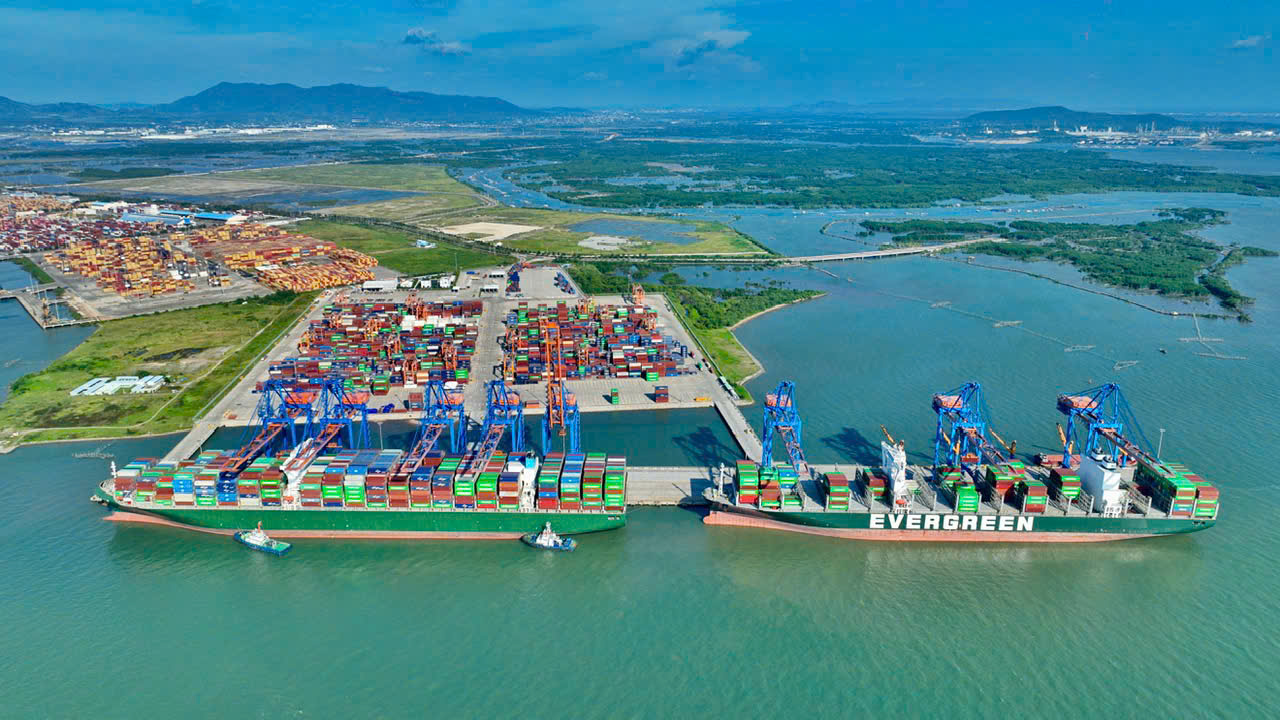
The establishment of the Cai Mep Ha Free Trade Zone will enable Ho Chi Minh City to fully leverage the advantages of the Cai Mep – Thi Vai deep-sea port. Photo: SƠN NHUNG
“Unlocking” the investment environment
The proposed mechanisms are necessary and reflect strong institutional experimentation, opening the door to realizing the FTZ. Among them, granting authority to the city’s People’s Committee to decide on projects will significantly reduce administrative processing time, helping the city respond quickly to investor needs.
Regarding land policy, this is a decisive factor. Allowing land allocation and leasing without auctions will make it easier to attract strategic investors—global “eagles” and major multinational corporations.
Regarding tax incentives, these are essential financial tools to compete with FTZs in other countries. For investment and customs procedures, allowing the establishment of economic organizations without prior project approval and granting expanded authority to local customs agencies can be seen as true “liberalization,” shifting from pre-check to post-check—aligning with the flexible nature of FTZs.
Ho Chi Minh City assesses that the establishment of the Cai Mep Ha Free Trade Zone will create breakthrough development momentum, helping the Southeast Region effectively implement the Prime Minister’s Decision No. 370/QĐ-TTg dated May 4, 2024, approving the Southeast Region Planning for 2021–2030 with a vision to 2050; maximizing the advantages of the Cai Mep – Thi Vai deep-sea port and Long Thanh International Airport. This will help the region become a leading maritime and logistics hub in Southeast Asia, and soon form a high-growth economic zone that drives development across the entire region.
The city’s proposal is a strong unlocking mechanism for the investment environment. Importantly, the superior institutional framework of the Cai Mep Ha FTZ will create spillover socio-economic impacts, not only for Ho Chi Minh City but for the entire region and the nation; serving as a key for Vietnam to integrate deeper into global value chains.
Dr. BUI DUY TUNG, RMIT University Vietnam:
A special legal corridor
Unlike conventional investment projects, an FTZ in Ho Chi Minh City requires a superior institutional framework, fundamentally different from the current legal system. The amended Resolution 98 will provide a “special legal corridor” by establishing a comprehensive regulatory structure covering location, functional zoning, governance mechanisms, land policies, investment incentives, administrative procedures, and customs mechanisms.
For a mega city aspiring to become a regional financial hub, the FTZ is not merely a preferential economic zone but a strategic nucleus for building an integrated ecosystem of finance – logistics – high technology. Leading global financial centers such as New York and Singapore have similar “special zones” where regulations on taxation, foreign exchange, and corporate law are designed according to international standards.
Most importantly, the FTZ will serve as a bridge between the domestic economy and global markets, creating strong spillover effects throughout the economic region. When major financial, logistics, and high-tech corporations establish regional headquarters within the FTZ, they will attract a network of supporting enterprises, service providers, and create high demand for skilled labor. This will drive the development of supporting industries, enhance technological and managerial capabilities of local firms, and create a dynamic labor market with high incomes.
T.Phương recorded
Source: nld.com.vn
Pageviews: 0
Portcoast: Da Nang’s Historic Opportunity to Become a Leading International Logistics and Trade Hub
By www.vietnam.vn - 28/11/2025
Da Nang is standing before a historic opportunity to transform into a ...
Portcoast Accelerates BIM-GIS Adoption for Infrastructure Management and Maintenance
By nhandan.vn - 03/11/2025
Mr. Phạm Anh Tuấn, General Director of Portcoast, stated: The BIM-GIS ...
Pioneering Digital Transformation in Vietnam’s Infrastructure Industry
By thanhnien.vn - 13/10/2025
With a deep investment strategy in technology and strong execution cap...