AI AND DIGITAL DATA ARE TRANSFORMING ROAD MAINTENANCE MANAGEMENT
(Chinhphu.vn) - The application of artificial intelligence (AI) and digital data is ushering in a new approach to transport infrastructure management and maintenance, shifting from manual inspections to automated monitoring and from reactive repairs to predictive analysis and early warnings. This marks an important step toward improving investment efficiency, extending infrastructure service life, and driving the development of the construction sector through science and technology.
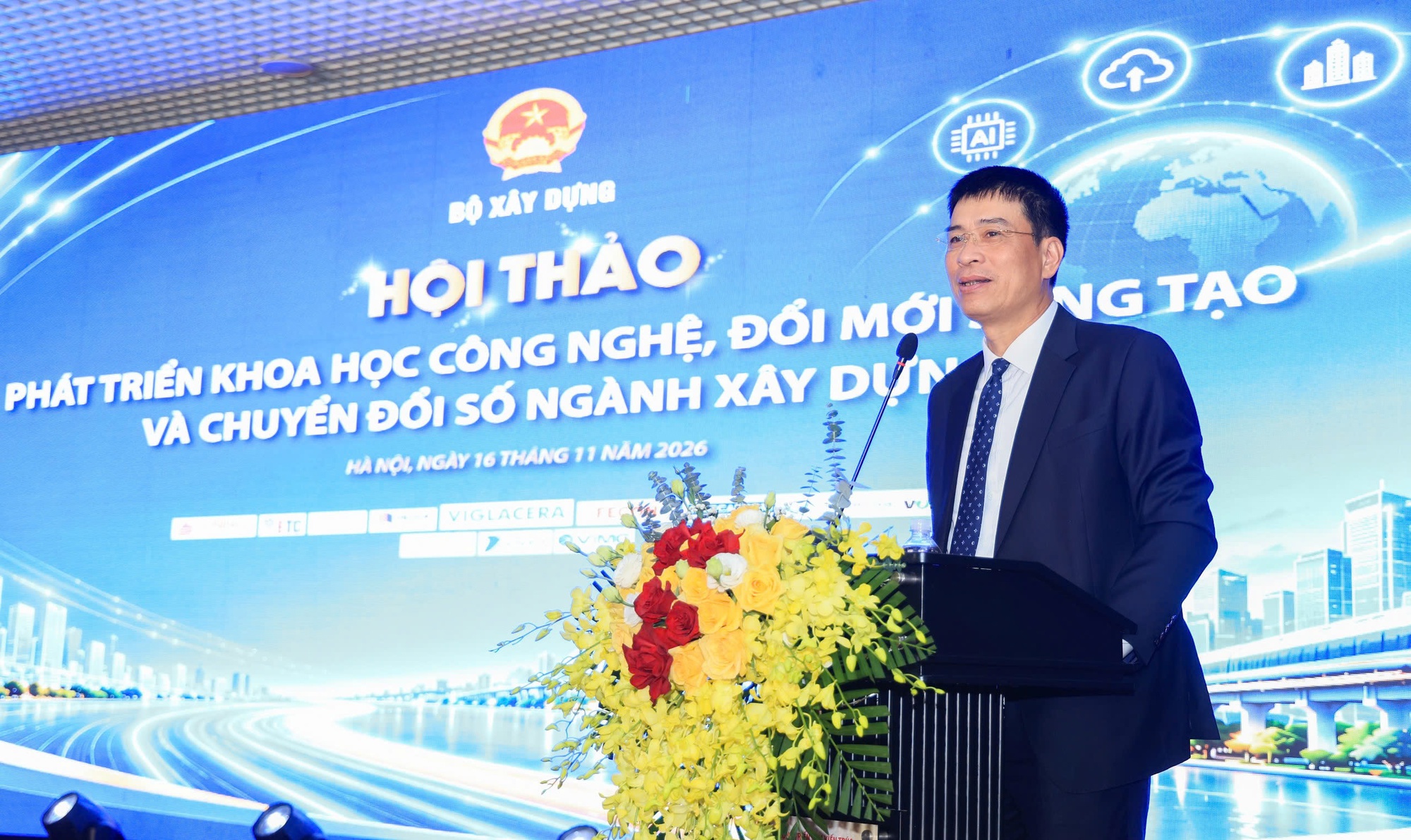
Deputy Minister of Construction Pham Minh Ha speaks at the Conference on Science and Technology Development, Innovation, and Digital Transformation in the Construction Sector on November 16. Photo: Bao XD.
On November 16, as part of a series of events dedicated to science, technology, innovation, and digital transformation in the construction sector, the Ministry of Construction held a conference on science and technology development, innovation, and digital transformation in the industry.
The conference focused on the application of technology in the road sector, digital transformation among construction enterprises, and the integration of Building Information Modeling (BIM), Geographic Information Systems (GIS), artificial intelligence (AI), and digital data into surveying, design, and infrastructure management. These initiatives are expected to enhance investment efficiency and contribute to achieving the country's double-digit growth target.
AI and Digital Data Are Transforming Road Management and Maintenance
Presenting a report on digital transformation in the road sector, Mr. Nguyen Manh Thang, Deputy Director General of the Department for Roads of Viet Nam (DRVN), stated that the country currently has approximately 600,000 kilometers of roads, including 26,452 kilometers of national highways and 3,345 kilometers of expressways. The extensive scale of this infrastructure network calls for a fundamental transformation in road management, operation, and maintenance practices.
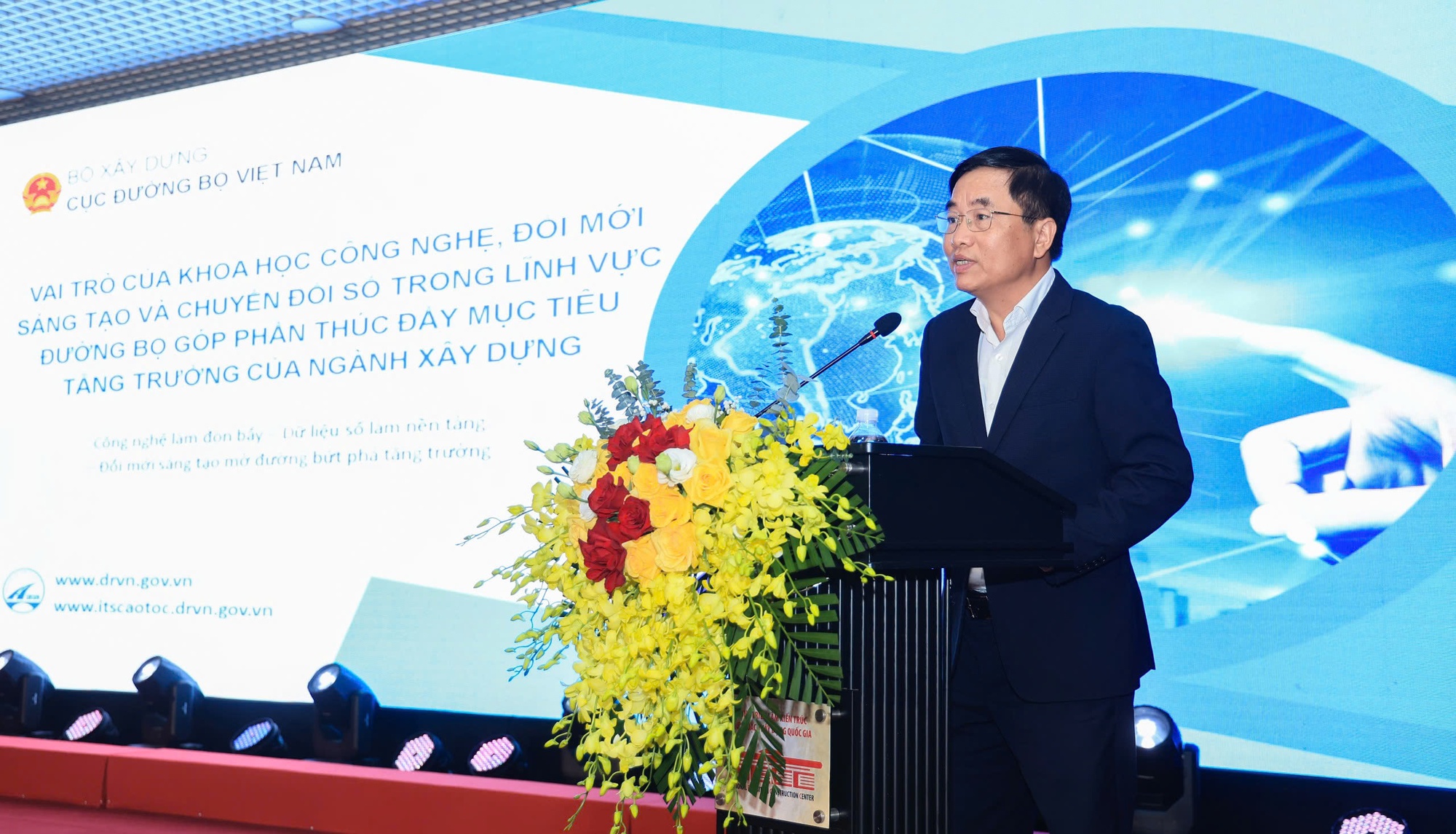
Mr. Nguyen Manh Thang, Deputy Director General of the Department for Roads of Viet Nam (DRVN). Photo: Bao Dien tu Chinh phu.
In response to these challenges, the Department for Roads of Viet Nam is pursuing a transition from conventional road management to intelligent, data-driven management built on three key pillars: the application of advanced technologies and new materials; the development of a national road database and digital governance systems; and the advancement of Intelligent Transportation Systems (ITS), Electronic Toll Collection (ETC), and vehicle weight enforcement.
A key priority is the establishment of a national road database, with standardized and synchronized information covering national highways, expressways, and local roads. This database will provide the foundation for integrated and consistent road infrastructure management nationwide.
Building on this digital foundation, AI will facilitate the transition from manual road inspections to automated surveying and predictive analytics. Specialized survey vehicles equipped with laser scanners and 360-degree cameras can collect detailed information on pavement smoothness, rut depth, and surface cracking. The collected data can then be automatically integrated into pavement management systems and infrastructure databases.
Notably, AI can combine vehicle axle-load data with historical pavement survey results to predict rates of road deterioration and identify potential damage before potholes develop. This enables road authorities to determine optimal maintenance schedules, prevent deterioration from spreading to underlying pavement layers, reduce repair costs, and extend the service life of road infrastructure.
Alongside improvements in road maintenance management, the development of Intelligent Transportation Systems is also being accelerated. The Department for Roads of Viet Nam is establishing a national ITS architecture framework, laying the groundwork for the National ITS Center. The traffic operations center for the eastern North-South Expressway and the electronic road transport payment system have already been put into operation.
Through ITS, traffic incidents can be automatically detected, monitored, and flagged for early warning, helping reduce incident detection and response times by approximately 35–45%. This contributes to minimizing traffic congestion and reducing the risk of chain-reaction accidents.
The effectiveness of this approach was demonstrated during a landslide incident between Km1288+170 and Km1288+240 on the Chi Thanh–Van Phong Expressway. Just 47 minutes after the incident was detected, one lane was reopened to traffic. By 10:25 a.m. on November 12, 2026, traffic had been fully restored.
In addition, high-speed weigh-in-motion systems operating around the clock, combined with AI-powered cameras, enable automatic license plate recognition, violation recording, and subsequent enforcement based on recorded evidence, without requiring vehicles to stop.
For the 2026–2030 period, the Department for Roads of Viet Nam aims to comprehensively modernize investment, construction, management, maintenance, and operation across the national road network, with a target of establishing 5,000 kilometers of smart expressways.
Applying AI to Optimize Infrastructure Design
From an industry perspective, Mr. Tran Phuc Minh Khoi, Deputy General Director of Portcoast Consultant Corporation (Portcoast), noted that large-scale transport infrastructure investments are generating enormous volumes of data and engineering design documentation. However, this valuable knowledge remains fragmented across individual projects, project owners, and consulting organizations. Many project records are still stored separately as two-dimensional (2D) drawings and have not been systematically organized for effective utilization and reuse.
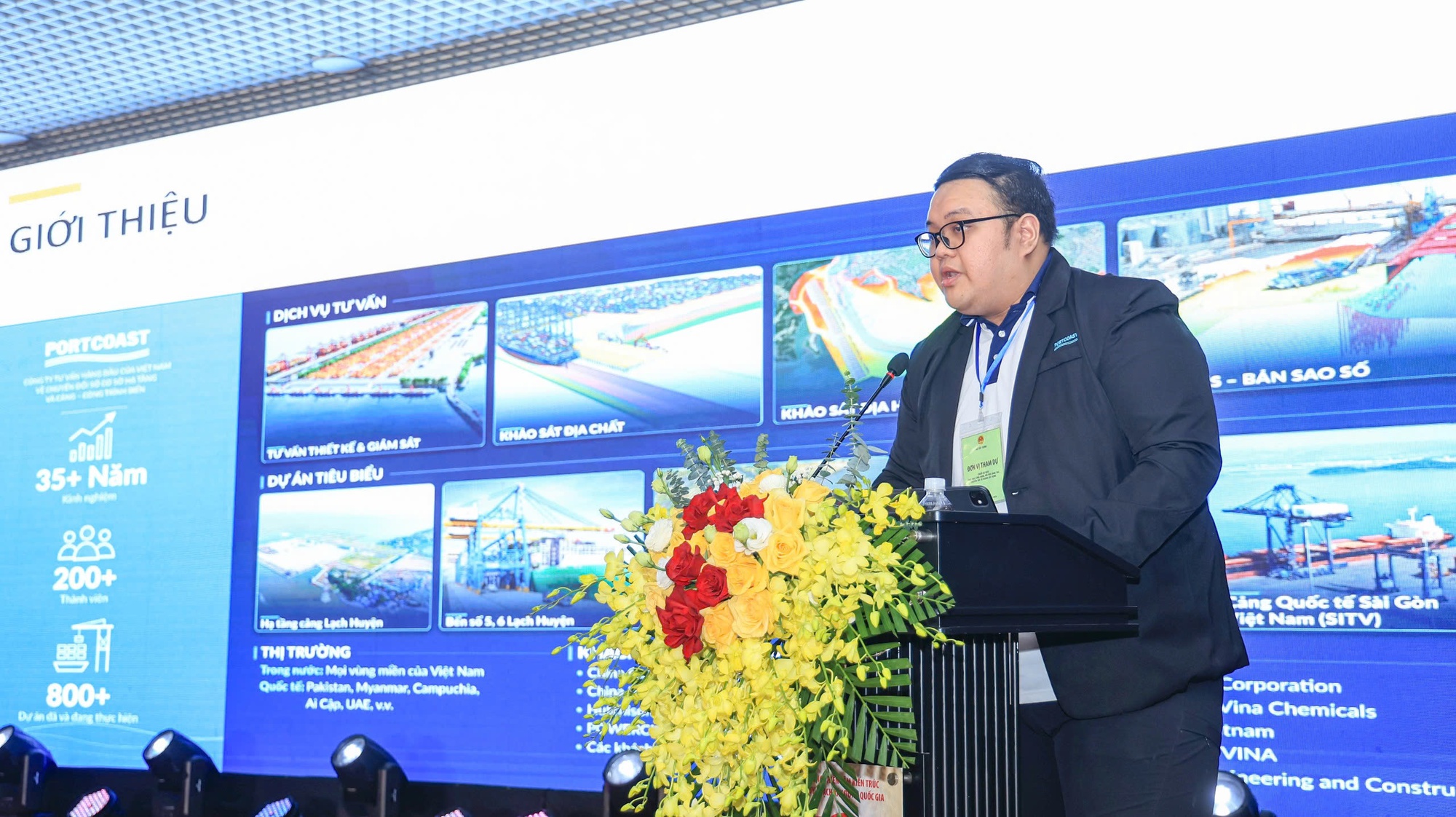
Mr. Tran Phuc Minh Khoi, Deputy General Director of Portcoast Consultant Corporation (Portcoast). Photo: Bao Dien tu Chinh phu.
According to Mr. Khoi, establishing a shared data library covering roads, bridges, railways, and seaports would enable the construction sector to leverage knowledge accumulated from previous projects, reduce research time, and improve engineering design quality.
Drawing on its experience in delivering projects both in Viet Nam and internationally, Portcoast has consolidated project data and developed a digital library to support research and generative design. Through this platform, engineers can select reference designs from infrastructure projects that have already been constructed and put into operation, then use generative AI to produce multiple design alternatives for comparison, evaluation, and selection of the optimal solution.
Notably, at the Cai Mep Ha mega-port project, Portcoast has applied AI to develop a tool that links project data with engineering design principles and standards, enabling engineers to perform calculations and solve technical problems directly without depending on software supplied by foreign vendors. This approach provides engineers with greater autonomy, supports the gradual development of in-house technological capabilities, and enables closer control over both input data and calculation results.
In the urban railway sector, data covering railway alignments, stations, elevated structures, tunnels, and associated technical systems from projects in Ho Chi Minh City are also being accumulated to develop a comprehensive railway infrastructure data library.
Furthermore, integrating Geographic Information Systems (GIS) with existing site conditions, land-use planning information, underground infrastructure, and geological data on a unified digital map enables earlier identification of potential risks and supports the selection of appropriate engineering solutions. When combined with AI, the system can generate multiple design alternatives for a metro line, allowing engineers to compare options and identify the most efficient and cost-effective solution.
To accelerate digital transformation in the infrastructure sector, Portcoast has recommended introducing standardized digital data handover templates that clearly specify requirements for Building Information Modeling (BIM) models, GIS maps, point-cloud data, and bathymetric survey data. The company has also proposed developing a shared library of infrastructure components, initially prioritizing seaports and urban railway systems.
Portcoast has further proposed establishing techno-economic norms for digital surveying and the development of asset management models and digital twins. The company also recommends controlled pilot applications of AI agents in engineering design, accompanied by mechanisms for logging and tracking their activities. Engineers must directly review, verify, and take responsibility for the resulting outputs.
Removing Barriers to Scientific Research and Technological Applications
Addressing the conference, Deputy Minister of Construction Pham Minh Ha emphasized that, amid increasingly ambitious growth requirements, science, technology, innovation, and digital transformation must become key driving forces capable of bringing about breakthrough changes across the construction sector.
According to the Deputy Minister, an immediate priority is to continue improving institutional mechanisms and policies, addressing shortcomings in existing regulations and techno-economic norms, and removing barriers that hinder scientific research and the application of new technologies.
At the same time, greater attention must be given to developing a highly skilled scientific and technological workforce and investing in research infrastructure. To create technological products with practical value, the construction sector needs well-trained scientists, favorable working environments, and research facilities capable of meeting increasingly demanding requirements.
In the coming period, the Ministry of Construction will continue collecting and reviewing recommendations and proposals arising from the conference to identify appropriate solutions and create favorable conditions for advancing science, technology, innovation, and digital transformation throughout the construction sector.
This article is republished from Bao Dien tu Chinh phu, November 16, 2026 (photos: Bao Dien tu Chinh phu). Read the original article for the publisher's content and photos.
Pageviews: …
NGÀNH XÂY DỰNG GIỚI THIỆU LOẠT CÔNG NGHỆ MỚI, THÚC ĐẨY CHUYỂN ĐỔI SỐ
Theo baoxaydung.vn - 16/11/2026
Tại chuỗi sự kiện ngày 16/11 của Bộ Xây dựng, nhiều công nghệ mới về n...
PORTCOAST THÚC ĐẨY HỢP TÁC “3 NHÀ” VÀ ỨNG DỤNG CÔNG NGHỆ BẢN SAO SỐ TẠI QUẢNG TRỊ
Theo tlu.edu.vn - 21/10/2026
Ngày 20/10/2026, Portcoast tham dự lễ ký kết hợp tác giai đoạn 2026–20...
PORTCOAST ĐẦU TƯ CÔNG NGHỆ KHẢO SÁT 3D VÀ DIGITAL TWIN HIỆN ĐẠI HÀNG ĐẦU CHÂU Á
Theo doanhnghiepvn.vn - 29/10/2026
Trong bài viết dẫn ý kiến PGS.TS Hoàng Tùng, Hiệu trưởng Trường Đại họ...